Saffron Cardamom Cake
Spices shine bright in this Swedish inspired cake.

I probably associate nothing more with fall and winter baking than spices. My guess is that most minds go straight to the (in)famous pumpkin spice (yes, the lattes are everywhere) that seem to be added to pretty much anything from Thanksgiving to spring. But with today’s recipe I wanted to go down a different spice route: cardamom and saffron. While cardamom has become a staple spice in many people’s pantries by now, saffron—no doubt due to its prohibitive cost—not so much. Which is a shame, because saffron is an incredible ingredient for savory and sweet dishes alike.
In case you’re not familiar with either of those two spices, here’s a little background info:
Cardamom is a spice native to India and Indonesia, and the two main types that are commonly used today are green and black cardamom. While black cardamom is often used in Indian sauces and other dishes, it isn’t as widely used in North America as its green counterpart. While the pods of the latter are green, the actual seeds inside, which are the part that gets ground, are black. It’s used in savory dishes, but now also more and more in sweet ones.
What we know as saffron is the dried crimson stigmas (threads) of the Crocus sativus flower. The main producer of saffron today is Iran, but more and more countries have started producing it. Saffron’s price is so high because of the immense amount of labor required to harvest it—every crocus only produces three stigmas, which have to be harvested early in the morning before the flowers wilt in the sun. Not only does saffron lend everything it’s added to a beautiful yellow color, but also a rich buttery almond-adjacent taste.


Both cardamom and saffron are common staples in Scandinavian baking; just think of cardamom buns (kardemummabullar), saffron buns (Lussekatter), which are traditional treats for the Swedish mid-december holiday Santa Lucia, or Swedish cardamom cake. Scandinavians have understood that cold winters are easier to endure with warm spices and buttery pastries.
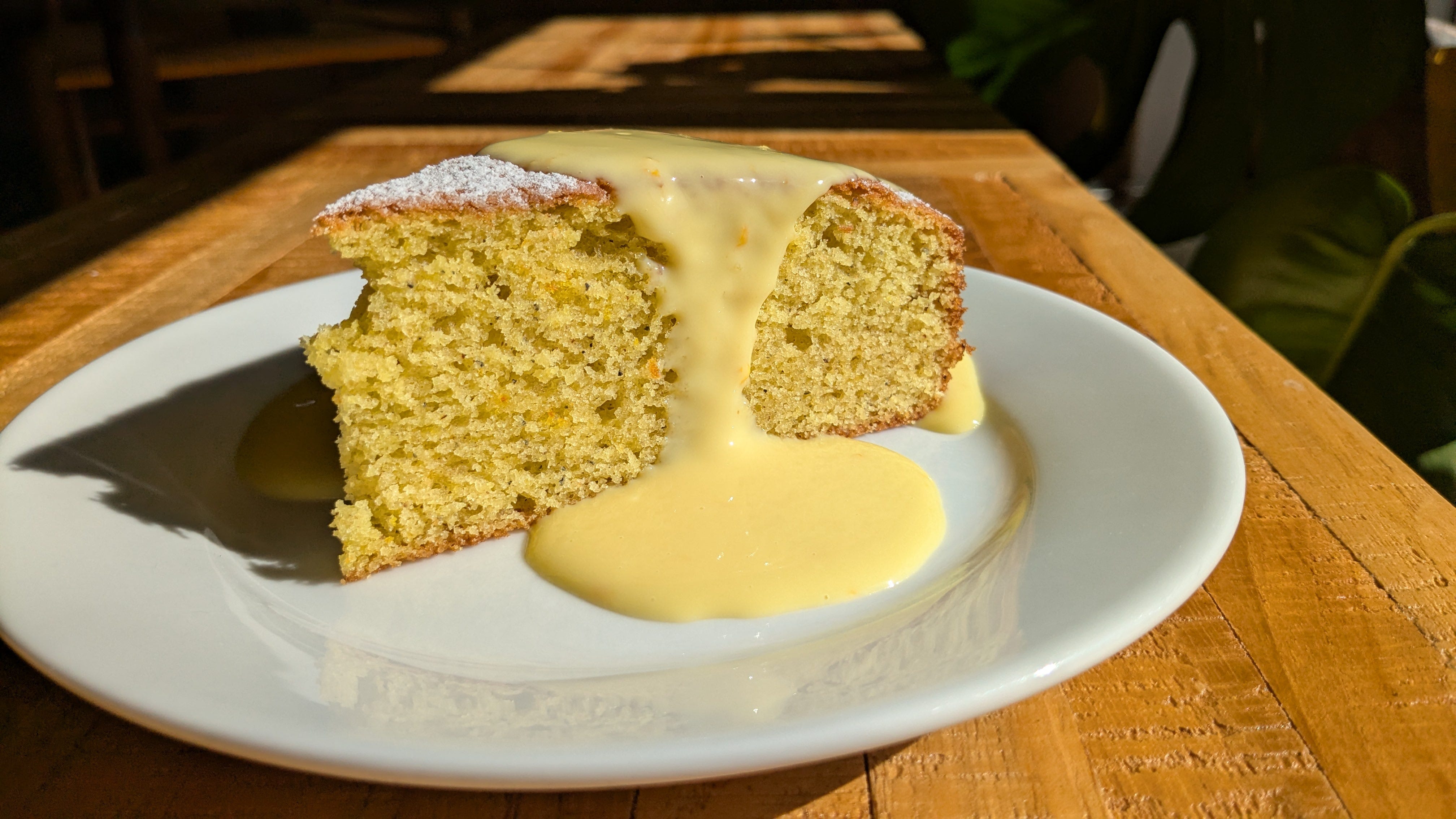
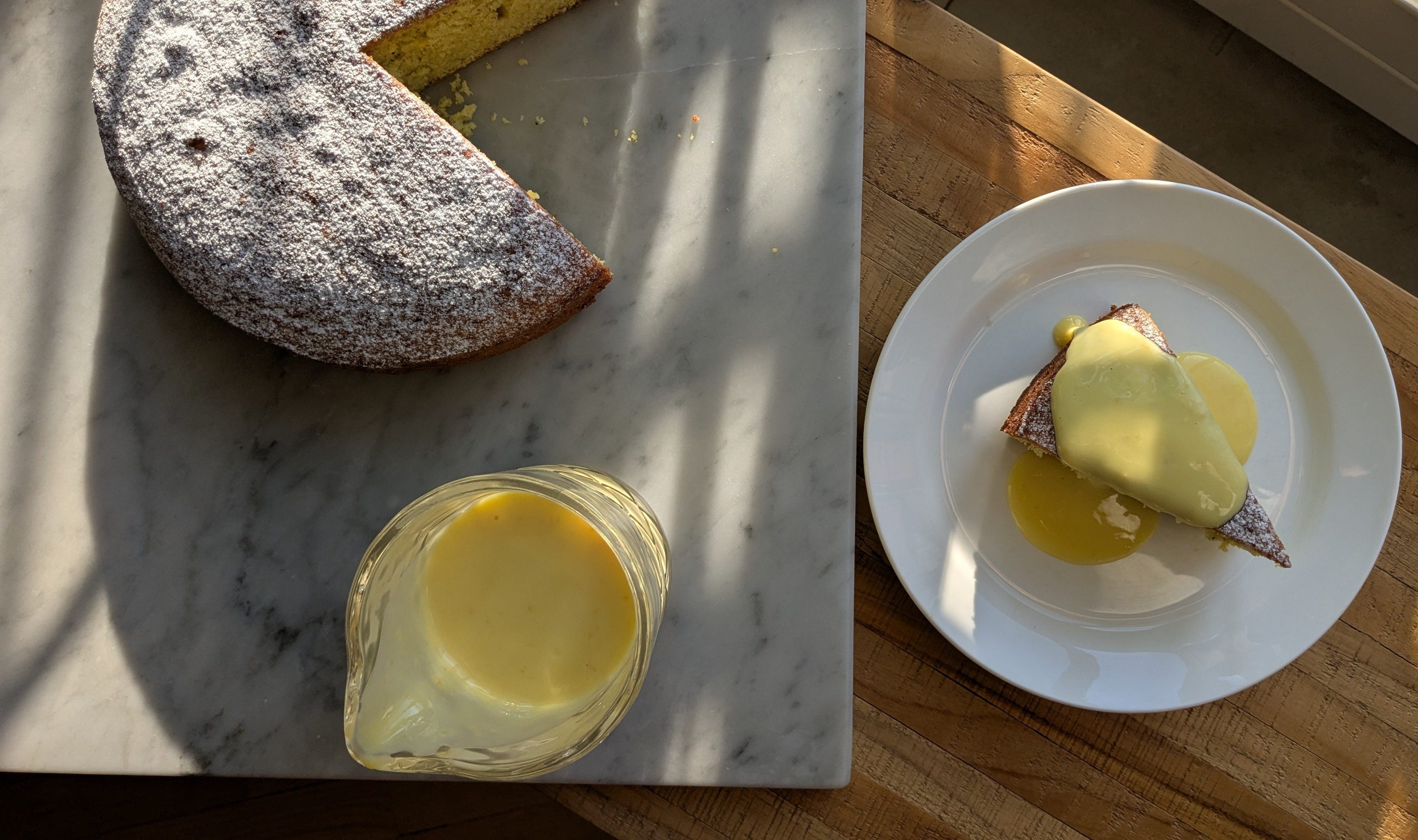
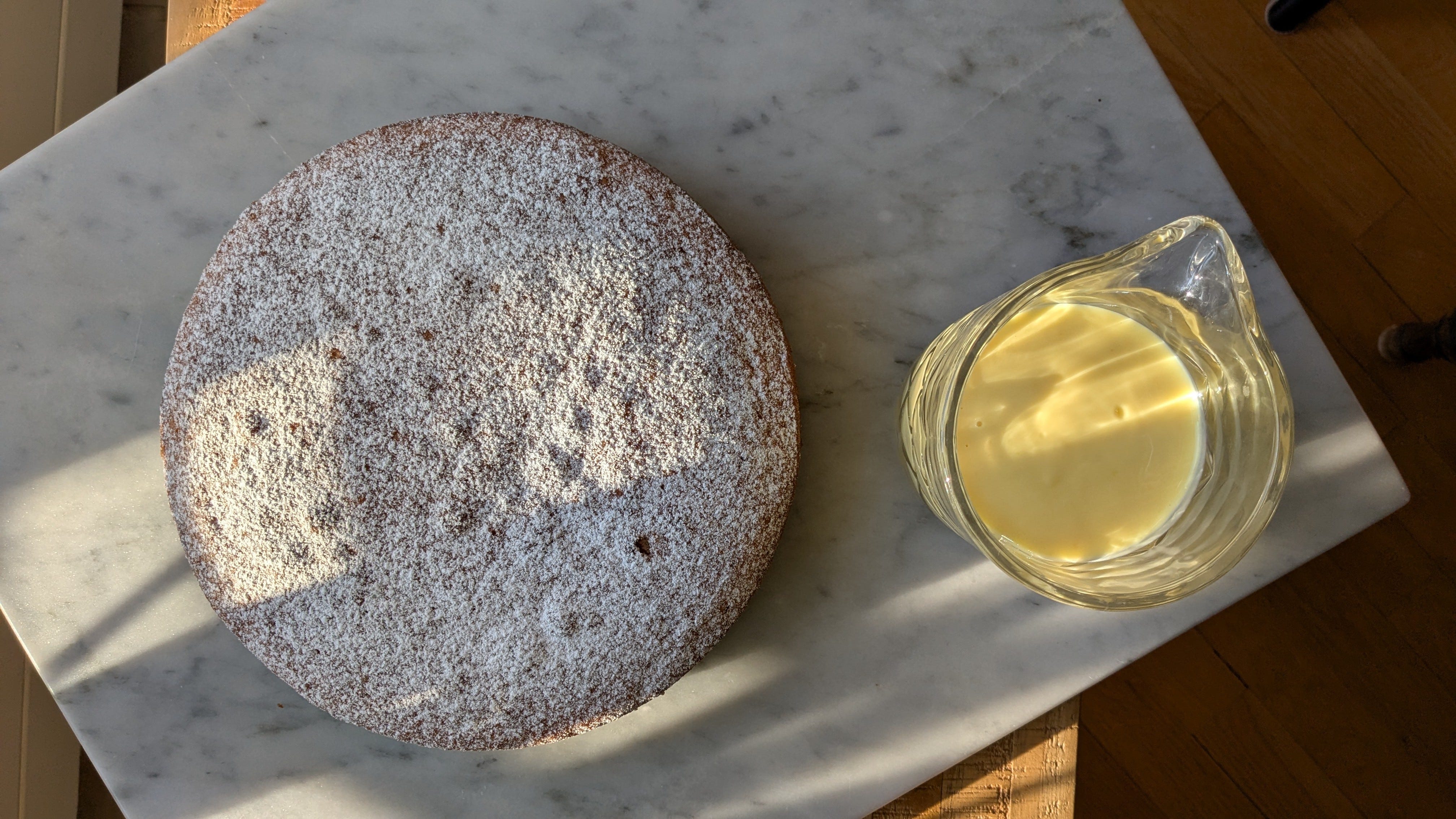
Today’s recipe is inspired by Swedish cardamom cake, but I wanted to combine it with the beautiful aroma and yellow color of saffron. It’s a truly heart warming cake for the cold and dark winter days. Since the cake is so simple, I decided to accompany it with a silky smooth orange crème anglaise that makes it the perfect dessert for your winter dinners.
Crème anglaise (or pouring custard) is a dessert sauce thickened exclusively with egg yolks, which give it a rich and smooth texture, perfect for dunking all kinds of pastries into. The basic traditional version is flavored with vanilla beans, but the beauty of it is that you can infuse it with basically any flavor you like or add liqueurs and other liquids to make it even more interesting.
It is however famously finicky to make: you need to know how long to cook it for so that the egg yolks don’t curdle, but you have a noticeably thickened sauce that doesn’t taste of raw egg yolks. But don’t be discouraged, it is absolutely doable and the end result well worth it. If you feel like learning something new or you’ve always wondered how to make crème anglaise, this is the perfect moment to try it. However, if you prefer something more simple, the cake will be perfectly delicious on its own, or you could serve it with a side of seasoned sour cream (just add a bit of sugar, orange zest and ground cardamom for example).
RECIPE
Serves 10-12 people
Equipment: 9”/23cm round springform; fine mesh sieve: stand or hand mixer with the paddle attachment
INGREDIENTS
For the cake:
180g soft unsalted butter
180g white sugar
Zest of 1 orange, ideally organic or untreated
3 large eggs
100g whole milk
0.5g saffron threads (~40 threads)
100g sour cream
200g all-purpose flour
50g almond flour
7g (1.5 tsp) baking powder
3g (0.5 tsp) baking soda
1.5 tsp grounds cardamom, ideally freshly ground
3g (0.5 tsp) salt
Some icing sugar for dusting
For the crème anglaise:
3 egg yolks
70g white sugar
450g whole milk
2 oranges, ideally organic or untreated
Pinch of saffron (~20 threads)
Pinch of salt
METHOD
Start by making the cake:
Add the milk and the saffron to a pot and gently heat them up. Just before boiling, take the pot off the heat and let the milk infuse for 30 minutes. Once the 30 minutes are up, strain the milk through a fine mesh sieve. Don’t throw out the saffron threads, we’ll add them to the cake.
In the meantime, butter your springform and cover the bottom with parchment paper. Dust the sides with all-purpose flour, shaking off any excess.
Preheat your oven to 190°C/375°F.
Now place the sugar in a small bowl and add the orange zest and the drained saffron threads. Rub the zest and the saffron into the sugar with your fingers to release the essential oils and evenly distribute the saffron.
In a separate bowl, whisk together the dry ingredients: all-purpose flour, almond flour, baking powder, baking soda, salt and cardamom.
In a small bowl or measuring cup, combine the wet ingredients: saffron milk and sour cream.
Add the sugar to the soft butter and beat with the paddle attachment of your stand or hand mixer until slightly fluffy and pale (3-4 minutes). Add the eggs one at a time, beating well after each addition. Now add the dry and wet ingredients alternately in 3 additions, beginning and ending with the dry ingredients. After each addition, mix only until incorporated so as not to overmix.
Transfer the cake batter to the springform and smooth the top with an off-set or rubber spatula.
Bake on the middle rack for 35-40 minutes, until the top is nicely browned and a skewer or cake tester inserted into the middle comes out clean.
Let the cake cool down in the mold for 30 minutes, then unmold and let it cool completely on a cooling rack. Once it’s completely cool, dust with icing sugar.
Storing tips: the cake can be stored wrapped in clingfilm or in an airtight container at room temperature for up to 3 days.
Now make the crème anglaise:
Tip: always err on the safe side when making crème anglaise; cook with low heat, stir constantly, and pay close attention to the thickness of the mixture.
Add the milk, the zest of 1 1/2 oranges and the saffron to a pot and gently heat everything over medium heat. Just before it starts to boil, take the pot off the heat. Let the milk infuse for 1 hour. Once the hour is up, strain the milk through a fine mesh sieve, then return it to the pot and heat it again over medium heat. (We won’t be using the leftover saffron in this recipe, but you can add it to porridge, soup, rice or anything else you can think of).
Prepare a clean bowl with a fine mesh sieve sitting on it next to the stove. You’ll strain the crème anglaise into the bowl to remove it from the heat source. If you want to be extra safe, you can place the bowl in an ice bath; this will stop the cooking even faster.
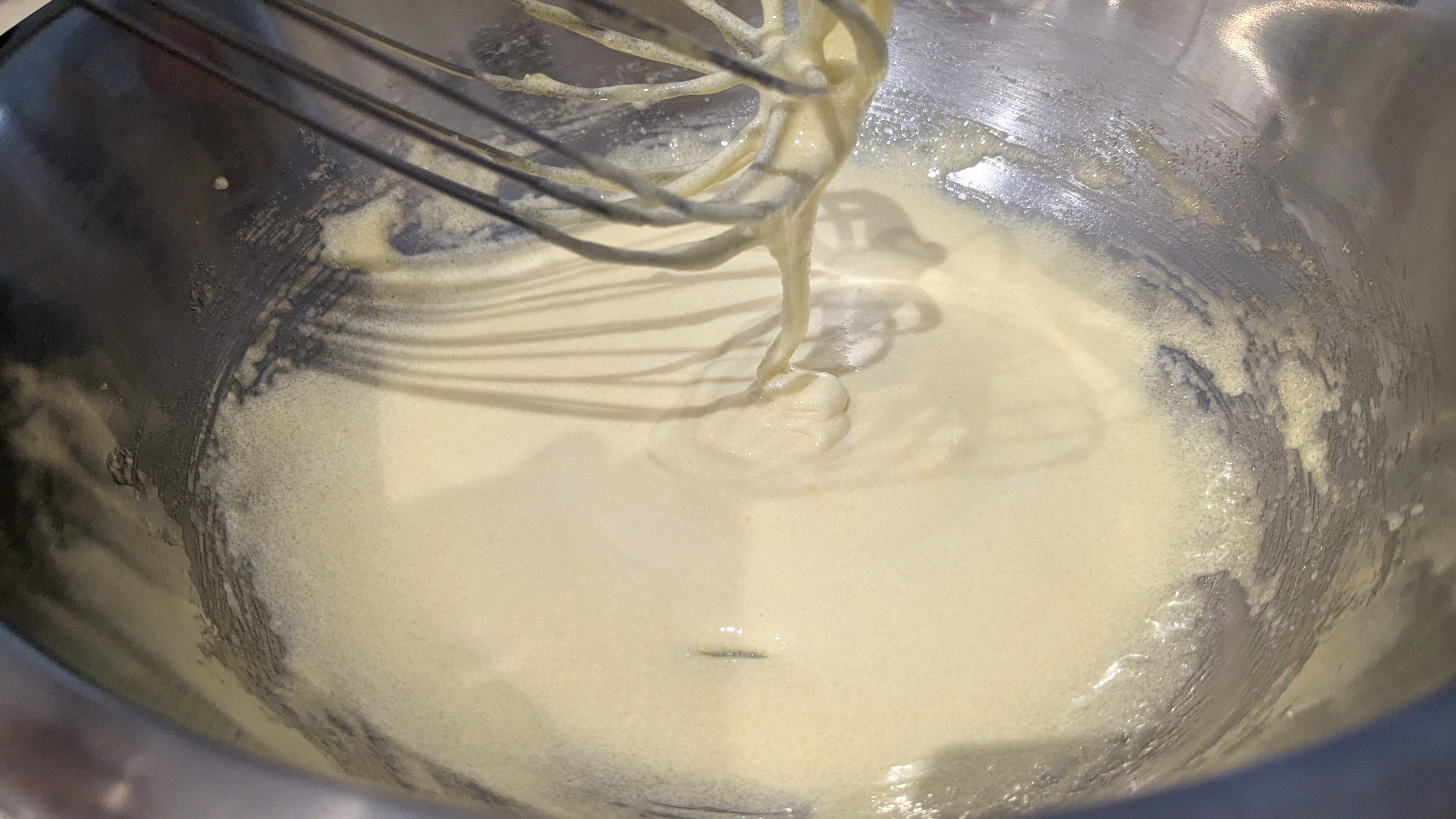
While the milk is heating, vigorously whisk the egg yolks with the sugar in a bowl, until the mixture is pale and has slightly thickened (~ 30 seconds). Once the milk is hot, pour about 1/3 of it into the bowl with the egg yolks while whisking. This is called tempering the eggs, which brings the egg yolks up to temperature without curdling them. Then add the rest of the milk, whisk to combine, and return everything to the pot.
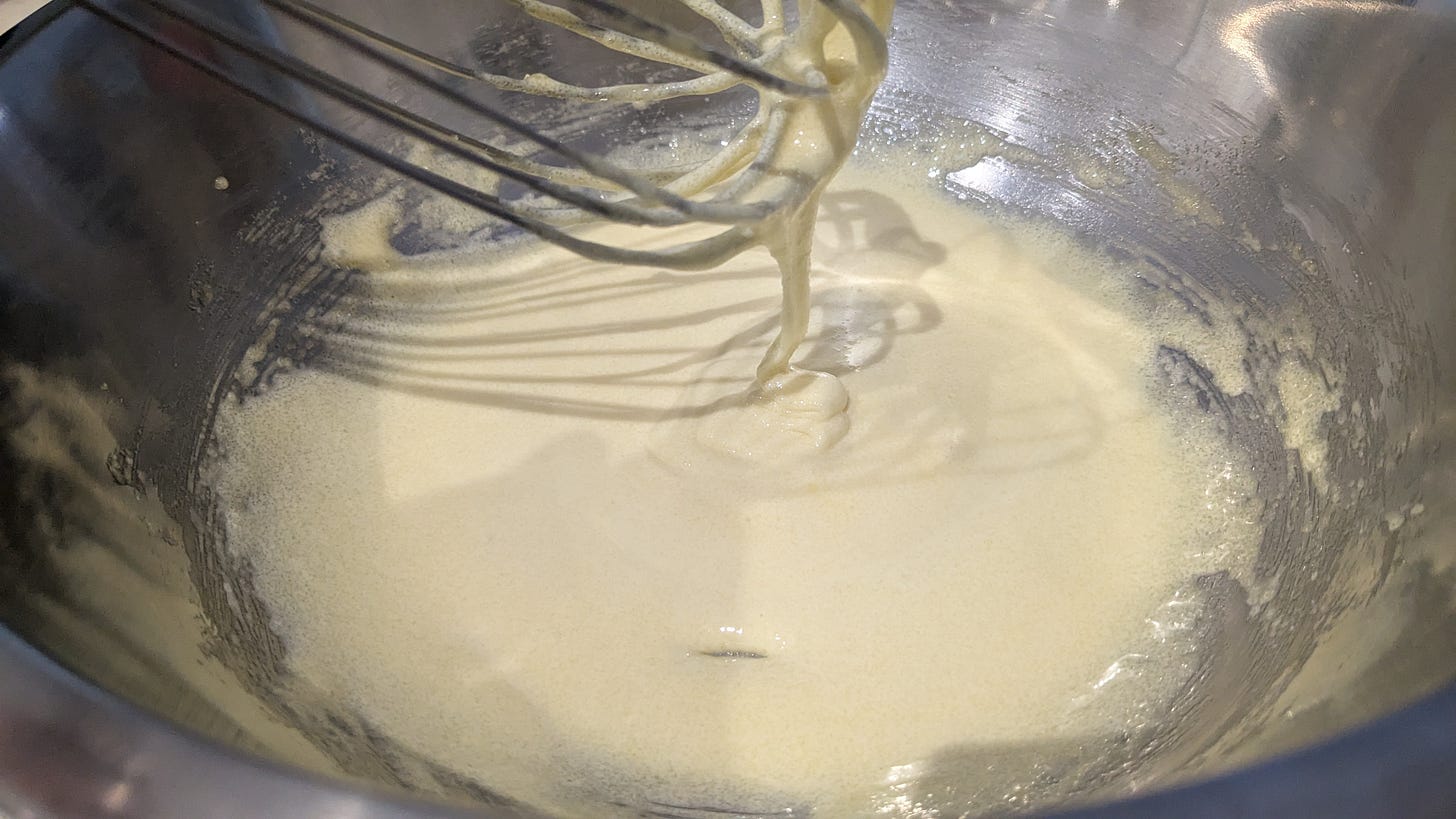
The egg yolks beaten with the sugar until pale and slightly thickened Over low (!) heat, gently heat the mixture, stirring with a heat-proof rubber spatula at all times. You want to keep everything in motion, because otherwise yolk could get too hot on the bottom and curdle. At some point you’ll notice how the mixture becomes thicker and envelopes the spatula. Do a quick test with a spoon: if the custard stays on the backside of the spoon and when, if you run a finger through it, it stays separated without any drops running down, it’s cooked. Immediately remove it from the heat and strain through the sieve into the prepared bowl. The crème anglaise will continue to thicken while it’s cooling down. Immediately grate in the zest of the last 1/2 orange and stir well to combine.
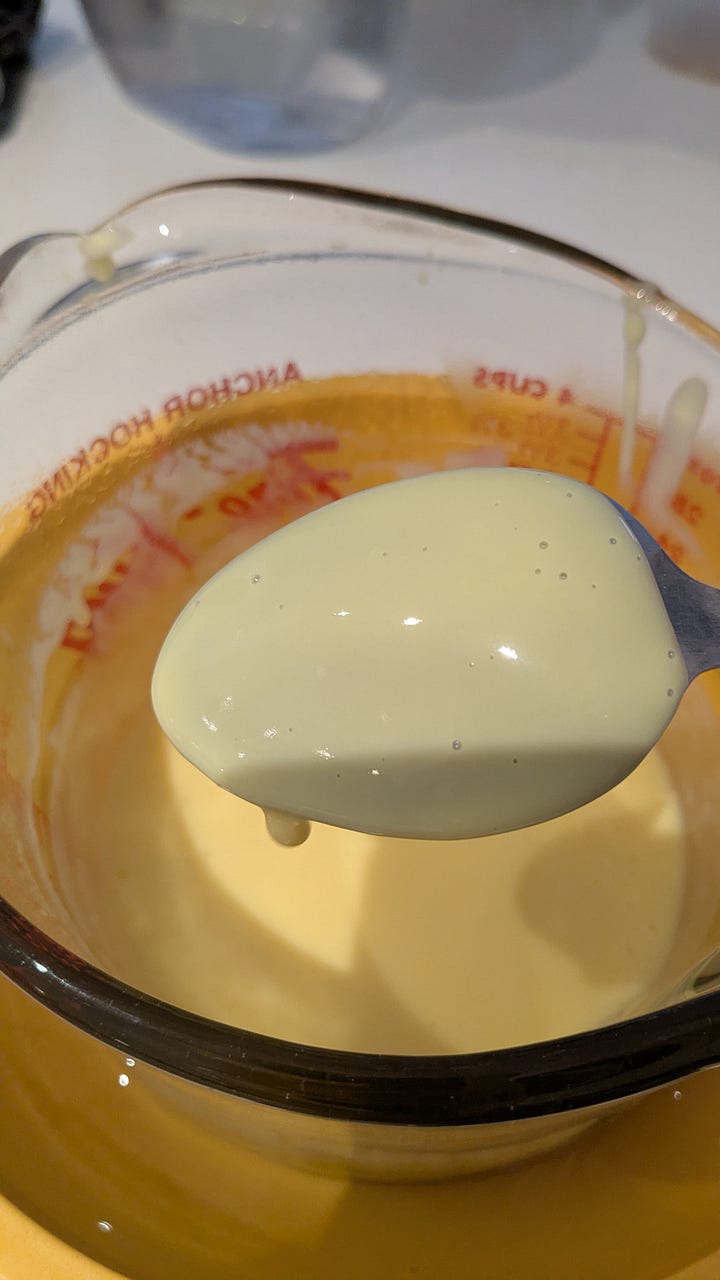
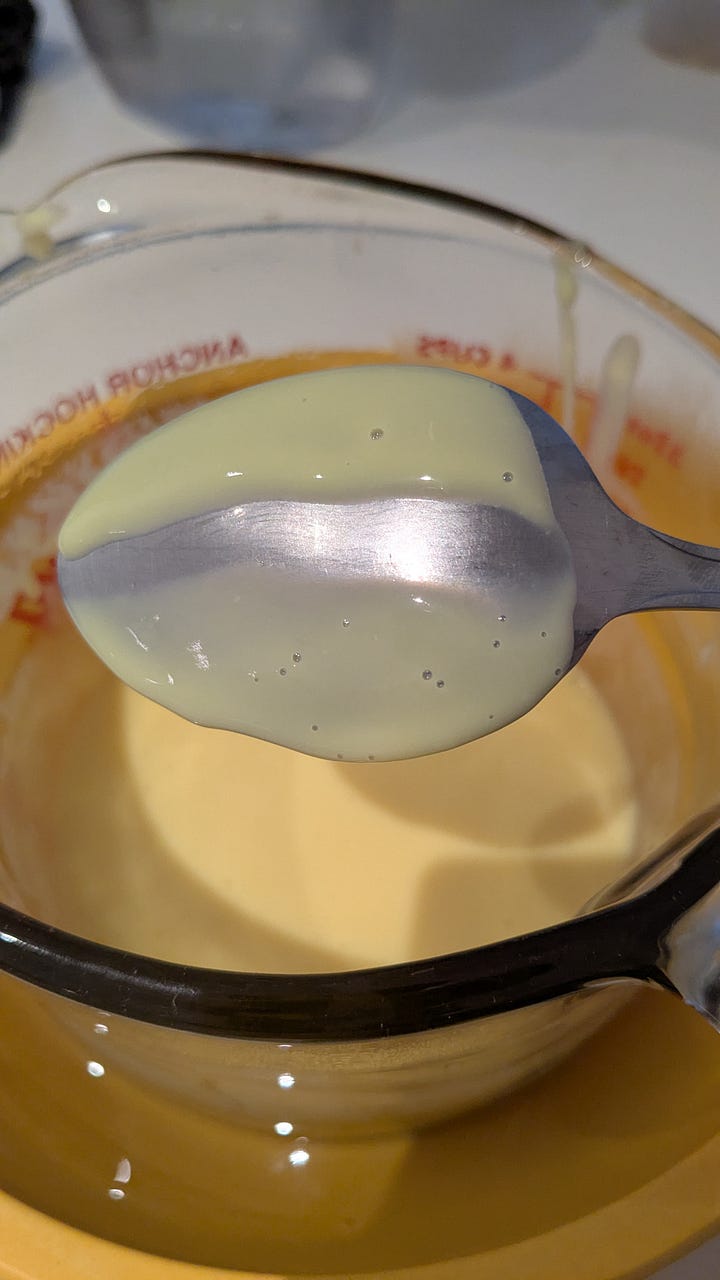
Spoon test: the custard is done when it stays on the back of a spoon and isn't runny anymore I suggest serving the cooled crème anglaise in a nice pouring vessel alongside the cake, so that your guests can serve themselves.
Storing tips: the custard can be made ahead of time and stored in the fridge for up to 3 days.